Is Morning Stiffness Just Part of Getting Older?
A creaky start to the day is something many adults notice. We look at everyday habits that may help you feel looser and when stiffness is worth raising with a doctor.

The short answer
A little stiffness when you first get up is common, and it becomes more common as we get older. For many people it eases within a few minutes of moving around. That kind of brief, mild stiffness is usually a normal part of how bodies change over time.
But "common" doesn't mean you have to just put up with it. And stiffness that lingers, gets worse, or comes with other changes is worth paying attention to. The details matter, so it helps to know what's typical and what isn't.
Why bodies can feel stiffer after rest
Your joints and muscles like to move. When you stay still for hours, as you do overnight, they get a break from the gentle motion that keeps things feeling loose. Joints rely on a slippery fluid that moves around as you use them. After a long stretch of rest, that fluid hasn't been circulating much, and the surrounding muscles and tissues haven't been warmed up.
Age plays a role too. Over the years, the cushioning in joints can wear down a bit, muscles tend to lose some strength and flexibility if we don't keep using them, and connective tissue can become less stretchy. None of this happens overnight, and it varies a lot from person to person.
Other everyday things can add to it:
- Sleeping in one position for a long time
- A mattress or pillow that doesn't suit your body
- A cool bedroom, since cold can make muscles feel tighter
- Being less active than usual the day before
- Old injuries that act up after rest
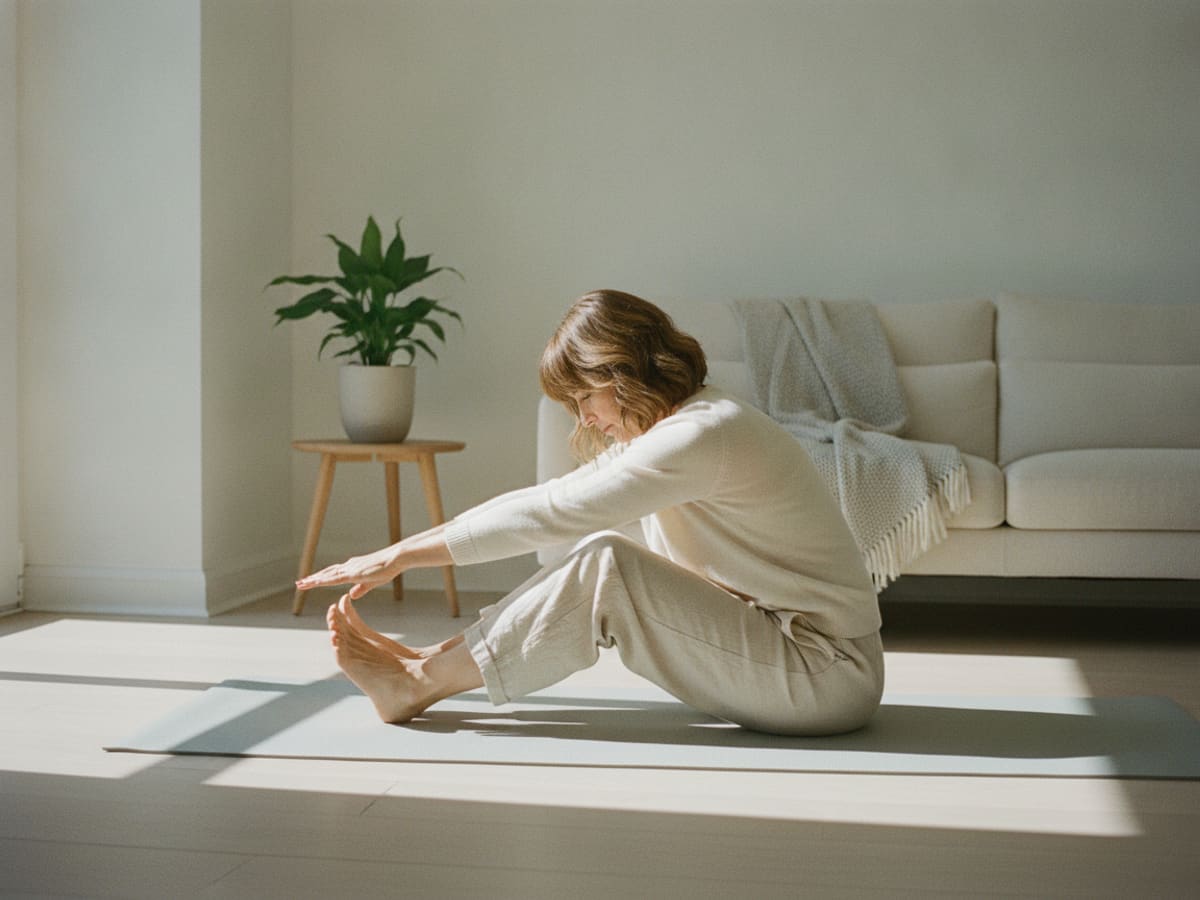
Gentle ways to start the morning
You don't need a full workout. A few slow, easy movements before you even get out of bed can help your body shift from rest to activity.
- Lie on your back and slowly point and flex your feet a few times.
- Make gentle circles with your wrists and ankles.
- Bring one knee toward your chest, hold for a moment, then switch sides.
- Roll your shoulders back a few times, then forward.
- Sit up slowly on the edge of the bed and take a few deep breaths before standing.
Move within a comfortable range. You should feel a mild stretch, never sharp pain. If something hurts, stop and ease off.
A warm shower or a few minutes with a warm towel on a tight spot can also feel soothing in the morning. Many people find that a little warmth makes it easier to get going.
Habits that keep you moving through the day
Morning stiffness often reflects what happens the rest of the day and night. Small, steady habits tend to matter more than occasional big efforts.
Move regularly. Gentle activities like walking, swimming, cycling, or tai chi keep joints and muscles in use without being harsh on the body. If you sit for long stretches, try standing up and moving around every half hour or so.
Include some strength work. Keeping muscles strong helps support your joints. This can be as simple as light resistance exercises or bodyweight movements, done in a way that suits your abilities.
Stretch when your body is warm. After a walk or a shower, muscles are usually more willing to lengthen than they are first thing in the morning.
Pay attention to your sleep setup. A supportive mattress and a pillow that keeps your neck in a comfortable position can make a difference for some people. Changing positions during the night, rather than staying curled up in one spot, may also help.
Stay hydrated and eat a balanced diet. Your body is made up of tissues that rely on good overall nutrition. There's no magic food for stiffness, but taking care of your general health supports everything else.
Be kind to yourself on tough days. If you overdid it in the garden or skipped your walk, you may feel it the next morning. That's useful feedback, not a failure.
Signs to bring up with your doctor
Mild stiffness that fades quickly is usually nothing to worry about. Still, it's smart to mention certain changes to a healthcare professional, because stiffness can sometimes be linked to conditions that are worth looking into.
Consider making an appointment if you notice:
- Stiffness that lasts longer than about thirty minutes most mornings
- Swelling, redness, or warmth in a joint
- Pain that wakes you at night or keeps getting worse
- Stiffness that came on suddenly or is affecting both sides of your body
- Fatigue, fever, or unexplained weight changes along with stiffness
- Trouble with everyday tasks like buttoning a shirt, opening jars, or climbing stairs
- Numbness, tingling, or weakness in your arms or legs
Feeling a bit creaky when you first get up is something many of us experience as the years go by. With gentle movement, a little warmth, and regular activity, many people find their mornings feel easier. And if something doesn't feel right, trust that instinct and ask. You know your body best.